
How we “live” what we “do”
As a growing design firm Sequel started searching for its long-term home in 2021. In late 2022, Sequel Architecture was selected to redevelop an unassuming, but nonetheless historic building at 2513 Woodland Avenue in the Woodland Heights neighborhood of Des Moines. The building had been sitting vacant for almost eight years and was deteriorating quickly. Luckily, City of Des Moines and Polk County staff recognized it as an important part of the Des Moines context, worth preserving.
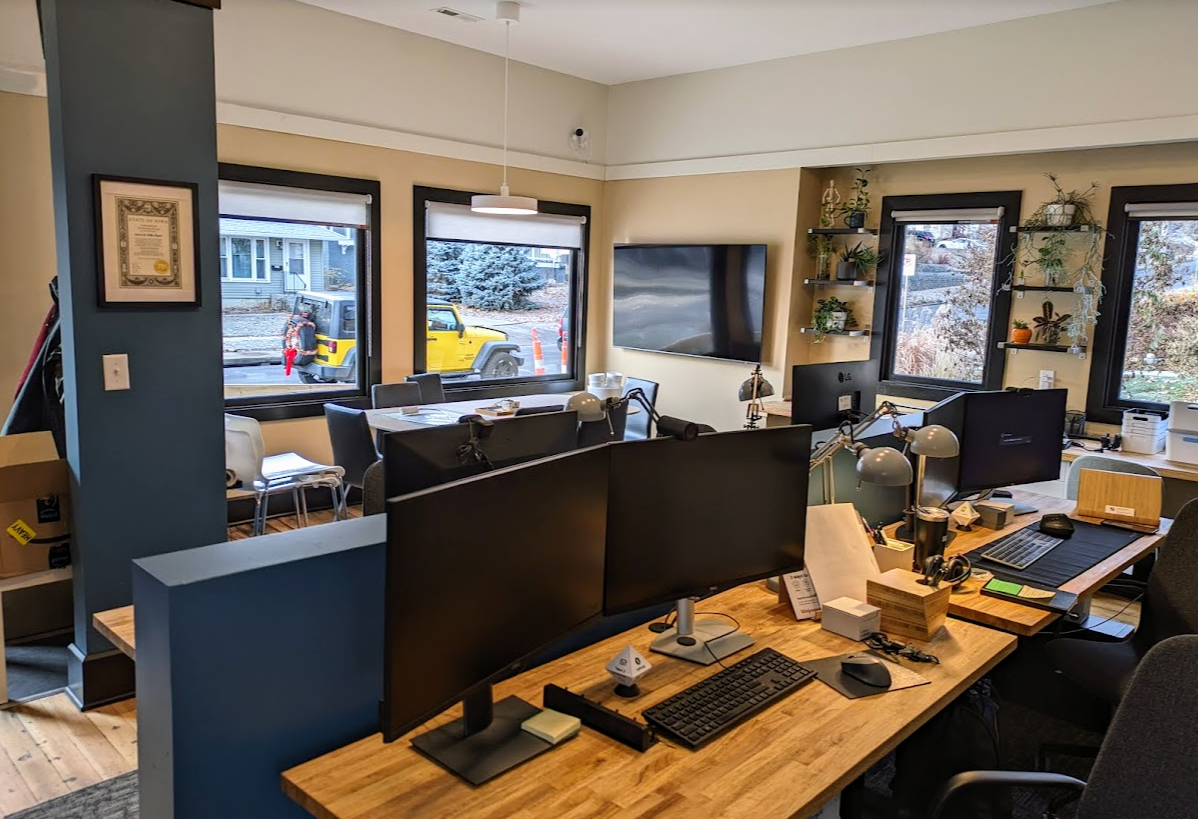
After almost a year of design, city approvals, and construction work (including a lot of “sweat equity”), Sequel Architecture moved in to our fully rehabilitated office space.
We love telling this story… Learn all about it below!
Historic Renovation. Modern Use.
We worked with Kelli Lydon Research Services to uncover and document the building’s history and significance to the City of Des Moines. On March 6, 2023, we completed the final step to designate our building as a Local Landmark.
Local Landmark status does three things:
(1) Documents in the public record the story of the building and the people who are associated with it.
(2) Helps ensure that the building is treated with sensitivity and respect long into the future
(3) Makes the building eligible for various programs to assist with sensitive rehabilitation work.
Grefe Grocery
This 625 square foot wood frame building was originally constructed in 1913 as “Grefe Grocery”. Hellen O. Wilkin purchased the business in the early 1920’s and then sold it just a few years later to the then-manager, Neil Sanford Landess.
Landess made an appearance in the Des Moines Register after foiling a robbery attempt and chasing the two “bandits” down Woodland Avenue!
Upon Neil’s death, his son Paul L. Landess took over operation of the store. Paul, like his father, owned the store until he passed away in 1963.
The property went through probate and sat vacant for a few years before it was purchased by Harlan and Bill Thomas.

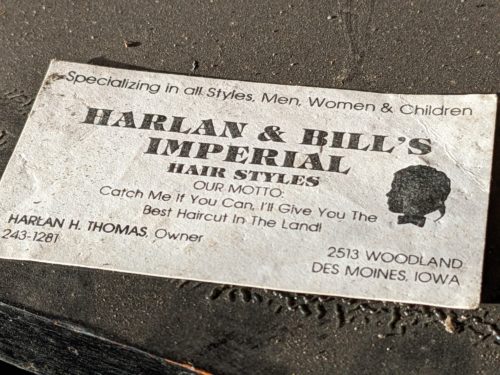
Harlan and Bill’s
The building was eventually sold to Harlan H. Thomas and William H. Thomas who remodeled the building into a barbershop. Harlan Thomas had been cutting hair since his early 20s (his mom was also a stylist). He graduated near the top of his state barber certification course and became known as a premier barber, traveling throughout Iowa and further to cut Black hair in a time when it was a generally segregated profession.
In 1988, Mr. Thomas was called to the Savery Hotel to trim Rev. Jesse Jackson’s hair while the Reverend was in town campaigning for president.
As a fixture in the jazz and blues music scene on Center Street and a member of the Soul Brothers band (and later the Platinum Blues Band), Harlan Thomas’ involvement in the music community meant that the barbershop also served as a social hub centered around music. Harlan Thomas was honored as a 1999 inductee into the Iowa Blues Hall of Fame.
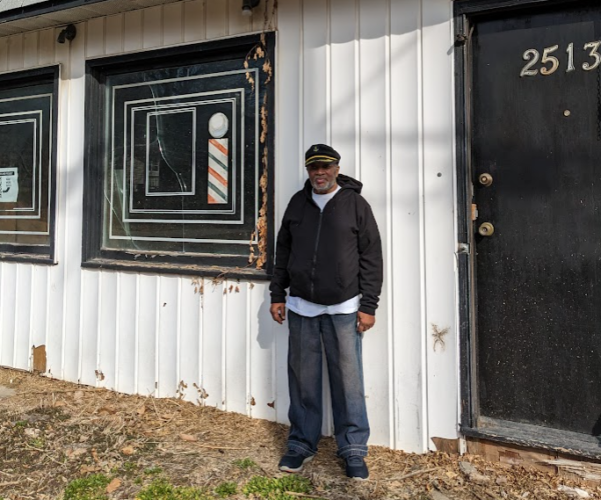
Harlan Thomas
The barbershop remained in operation for 47 years until closing circa 2015. A large building assessment for public improvements to the sewer system caused Mr. Thomas to close the shop at that time.
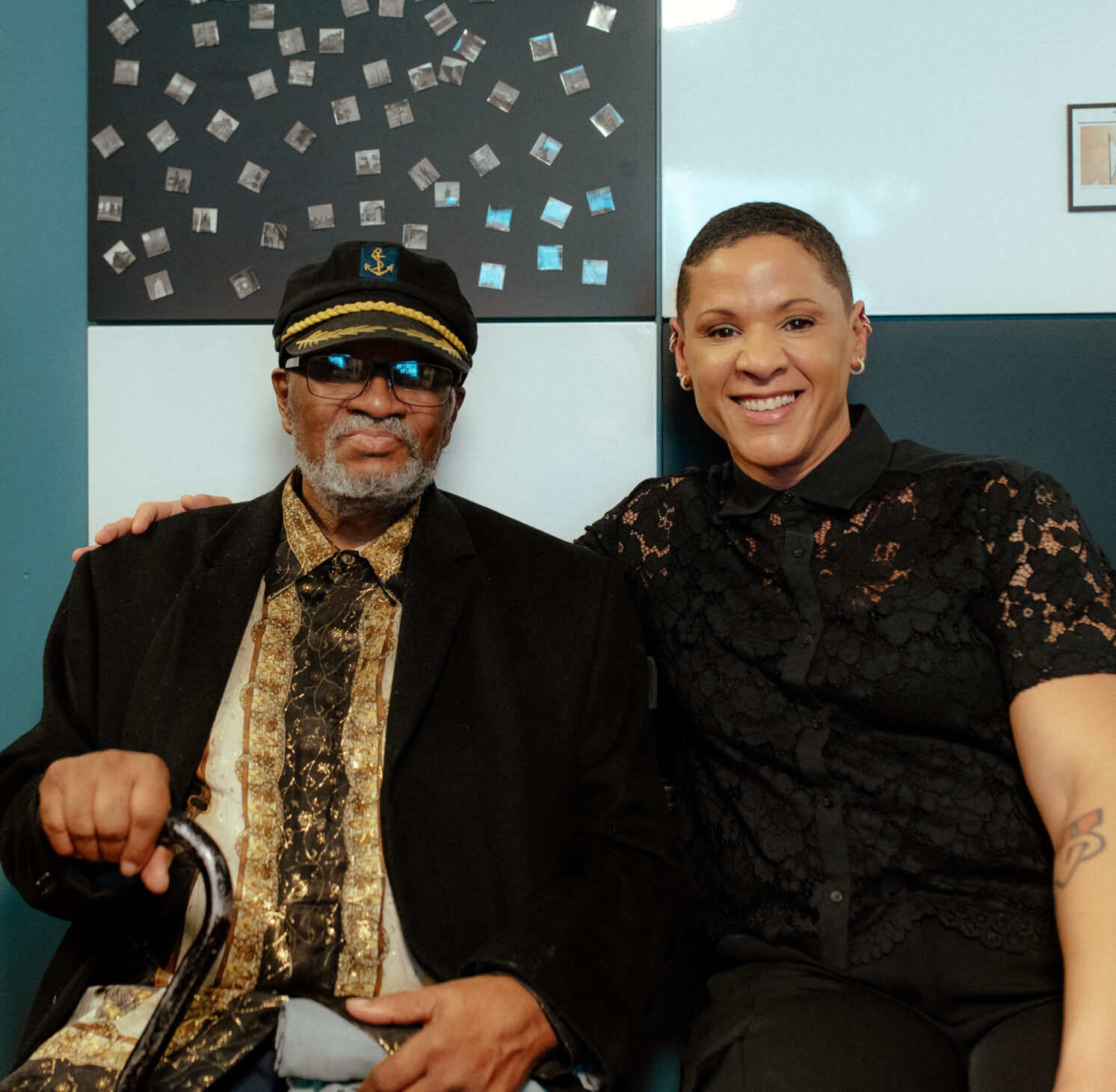
During construction, Mr. Thomas visited to share some stories with us about the barbershop days. He recounted that Saturday mornings meant people lining up down the block for one of his famous cuts. Mr. Thomas attended the Sequel “grand opening”. Sadly, Harlan Thomas passed away in 2024.
Throughout construction (and continuing now that Sequel is in the office fulltime), people regularly knock on our door to take a look inside, sharing their memories of Harlan Thomas, getting their hair styled in the barbershop, and playing jazz/blues music together!
Today: Sequel Architecture
We Are Still Here
As part of telling the Barbershop story, Sequel commissioned accomplished artist Jill Wells to create a site-specific installation. The piece, titled “We Are Still Here,” lives at the front door, visible from everywhere in the small office.
The piece consists of two 48-by-60-inch wood panels, salvaged from the walls of Harlan’s Barbershop, painted black. On the surface of each panel are hundreds of 3D black butterflies that are constructed from black, acid-free cardstock. Oral stories, names, and quotes are printed onto each butterfly. These stories tell the history of the landmark building that is 2513 Woodland Avenue, also known as Harlan’s Barbershop. Hundreds of individual butterflies on the side-by-side panels each makeup one-half of the symmetrical design of one larger butterfly. The butterflies represent black community members, the Thomas family, barbershop patrons, and the barbershop itself. The space between the two panels represents displacement in the black community, created by redlining and urban renewal. The black scale color palette focuses on the beauty of blackness.